IV. What are the choices of Relaxation Exercises and how do I use them?
Course speech
You have many choices for relaxation exercises: meditation, relaxation therapies and hypnosis. Please follow the guidelines below so that they will help you find the proper techniques to connect your mind and body to reach true relaxation. From there you can select the exercises that work best for you, practice some or all of them, or try various exercises before making them part of your stress treatment plan.
Meditation has been around for about five thousand years. In ancient times, the principle and objective of meditation has been aligned with spiritual practice: to be present with God and to receive his guidance to enter a selfless state. Although many people nowadays still practice it for spirituality, meditation is no longer confined to a religious framework. People practice meditation because they want to improve and relax themselves.
In Herbert Benson’s 1970 research publication ‘Relaxation Responses’, he created his own “meditation therapy” by including the word ‘one' each time you exhale. He showed that meditation when practice on a daily basis can reduce:
- Stress
- Heart rate
- Blood pressure
- Oxygen and metabolic burn rate
- Acidity level in blood which lessens stress
- Non-acute anxiety
- Dosage of medication eg tranquilizers
Benson showed that meditation can also:
- Enhance faster blood flow in the forearm
- Increase the temperature of the hand
- Strengthen the electrolysis of the skin
- Increase the alpha activity in the brain
If you decide to practice meditation, you must be aware that meditation can release emotions, and therefore it may be difficult for psychotic patients. If you are receiving medication therapy, meditation can possibly enhance the effectiveness of the medication. If you are practicing meditation on a regular basis, you must consult and follow the advice of your doctors on the anti-anxiety medications and dosages you are taking.
Meditation is a technique of mind control and focus to bring about relaxation and calmness. It focuses on moving one’s thoughts past the anxious and stressful elements that may be present in the consciousness so as to achieve a sense of wellbeing. Focusing on speaking a word or a phrase, hearing the sound of a bell or even the absence of sound, can be used as a means to engage in meditation.
Mantra Meditation
Mantra meditation involves saying a word or a phrase to focus on one thought in order to calm the mind and relax the body. It is repetitive, so any stressful thoughts can be freed. The mantra can also be a smooth, vibrating sound. You can select any mantra you want, so long as you can focus on the word, prayer or saying. Mantra meditation can be practiced on your own, and you only need very little preparation and time to gain relaxation benefits.
Instructions:
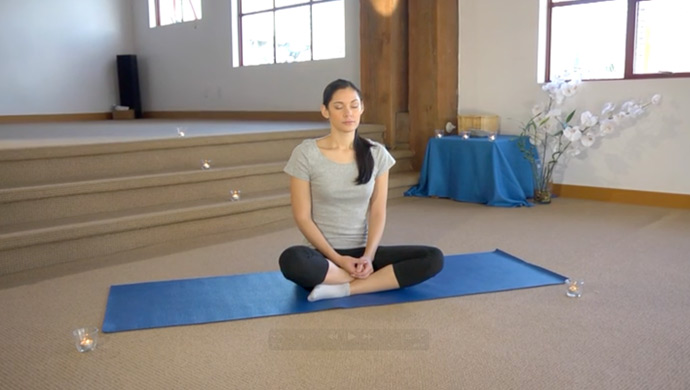
- Find a quiet place free from distractions.
- Sit up straight on a chair or on the floor using a mat, but you must be comfortable and upright.
- Chant or think of a mantra you would like to use. You can say for instance, “so hum” or a word like “one” or even a phrase such as “I am very calm , leave it to God”, as long as they sound soothing to you.
- Repeat your mantra rhythmically, slowly and continuously.
- Repeat your mantra for 5-30 minutes.
Mindfulness Meditation
Mindfulness meditation works from the philosophy of living in the present by focusing on your life as it is happening at that moment. Thoughts that come up during mindfulness meditation are free of judgment or reaction. Like mantra meditation, mindfulness meditation can be done without the help of a therapist or carer and requires little or no preparation. All you need is some time and a place to practice. Alhough there are different styles of mindfulness meditation, we are only giving you an example of what is known as the Body Scan which you may find useful.
Instructions:
- Sit or lie in a position that makes you feel most comfortable.
- Select one part of your body to start the process -it can be your head, feet, or hands, etc.
- Feel that part of the body with your mind, and acknowledge the sensations you are experiencing with that part of the body. For instance, does it feel warm, light or heavy? It does not matter which part of the body you use, as long as you focus on it.
- You do not need to attach any positive or negative feelings when you focus on those sensations. Stay emotionally neutral but acknowledge the characteristics of that body part and the sensations that come from them.
- When you have finished with one part, move on to the next. Repeat the same process with this other part of your body.
- Continue the same process until you have covered all parts of your body.
Sound Meditation
Sound meditation uses a medium of sound to move the busy activities of the mind into a calmer state. The idea of sound meditation is not to focus on the sounds one may experience, but to focus on the silence that surrounds them. This focus requires a great deal of mental energy, making this method a great way to acquire a relaxed frame of mind.
Instructions:
- Sit in a comfortable place.
- Focus on your breathing. Take approximately 6 seconds for each inhalation and exhalation.
- Continue to breathe as described in step 2 and focus on the sounds that surround you.
- Instead of focusing on the sounds themselves, focus on the silence and space that surround these sounds.
- Visualise each sound in your mind. Where is it coming from? What is making the sound?
- Practice this for 10-30 minutes until a calming sensation is reached.
Relaxation Therapies
Self-Control RelaxationIn using self-control relaxation exercises you will be inducing greater blood flow to different parts of your body to achieve relaxation. You can either focus just on your arms and legs, or on all body parts, like in the Progressive Muscle Relaxation exercise above. You can use simple phrases, like using a mantra, to encourage greater blood flow to a specific part of your body. The simple phrases can direct that particular body part to feel warm, cool or heavy, and then ultimately to relax. The relaxation benefits of this exercise are often helped with deep breathing. You can review Breathing Exercises for more information.
Like the other relaxation exercises, you can practice Self-control Relaxation on your own -you just need to make time in order to connect your body and mind.
Instructions:
- Start in a comfortable position.
- Begin with the part of the body that feels tense, stiff or painful.
- Concentrate on that body part in your mind and repeat the chosen phrase.
- As you repeat the phrase, allow your body to feel what you are suggesting. For example, if you are focusing on your arm and you repeat ‘my arm feels heavy and warm’, you will begin to feel the arm warming up from the increased blood flow.
- Once that body part is warmed up, you can then move to other parts of the body.
- After you complete a round of all parts of the body, you can return to the parts that are still tensed and repeat the procedure.
Applied Relaxation
Applied relaxation is a technique in which you can identify and address stressful thoughts and images directly. You then practice applying skills to the specific area that is causing you stress or anxiety. This technique can be used when you are feeling particularly stressed or worried.
Instructions:
- Identify, focus on, and monitor your stressful thoughts and the patterns they follow.
- Acknowledge these stressful thoughts and their patterns and let them be.
- Once you have acknowledged the stressful thought, let it go, and let go of the repetition of this thought.
- Allow yourself to focus on your present surroundings only, as opposed to playing back thoughts of past or future scenarios and events.
- You can use Focused Breathing to help focus on the present and strengthen your self-control.
As you are able to clearly acknowledge, let go and stop repetitions of stressful thoughts, do keep a diary of these thoughts as a way to further acknowledge them. You will then be able to recognise that these cause stress, and can immediately use applied relaxation to stop them from becoming worse.
Progressive Muscle Relaxation
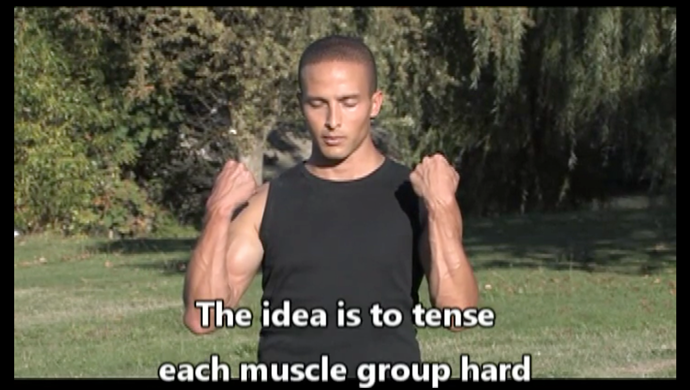
Progressive muscle relaxation is intended to help you release chronic tension, as you may not fully recognise that you are actually experiencing psychological and physical tension from the anxiety in your body. By tensing and releasing muscle groups in a particular order, you will be able to tell when your muscles are tensed and when they are relaxed. Over time, it will then become easier for you to relax your body. Although you can learn and practice the technique on your own, Progressive Muscle Relaxation is best taught by a professional therapist to begin with. Progressive muscle relaxation involves the tightening and relaxing the different muscle groups in your body in sequence. The idea behind this practice is to tighten each muscle group (but not to the extent which will cause an injury) for about 10 seconds, slowly relax and then give yourself another 15-20 seconds to relax before going on to the next muscle group. You must pay attention to how you feel when you relax your muscles, and not when you tighten them. In between the relaxation of two muscle groups, you can say ‘I’m relaxing’, ‘Release’, ‘Let the pressure drift away’ or any other relaxing words or sentences. You must focus on your muscles throughout the entire exercise. When you feel you are losing your concentration, bring yourself back to the muscle group that you are practicing.
Learning to relax your muscles using the progressive muscle relaxation is like learning any new skill, so you will need to practice. You should start with 16 muscle groups, and it is only with regular practice and learning how your body’s relaxed state really feels, that you will be able to reduce the number of muscle groups. You will also then be able to do groups of muscles instead of one group at a time. The instructions below start with the order for all 16 muscle groups, which can be reduced with regular practice but you will need to find a place and time to practice and complete the exercise.
Instructions:
- Sit, stand or lie down in a comfortable position.
- Tense and release 16 muscle groups in turn. Tense moderately and do not strain yourself. Hold the tensing for 7 to 10 seconds. You may wish to use 1001, 1002, 1003 as a form of counting.
- Focus on what is happening and feel each muscle group’s increasing tension. Visualizing on the muscle group you are tensing will help keep your focus.
- When you release each muscle group after tensing, do it quickly and then relax. Enjoy the sudden feeling of relaxation for at least 15 to 20 seconds before continuing with the next muscle group.
- Focus on one set of muscles and keep all other muscle group in a relaxed state.
- Tense and relax each set of muscles once. If a group is particular tense, you can tense and relax 2 to 3 times. Wait 20 seconds between each tensing and relaxing.
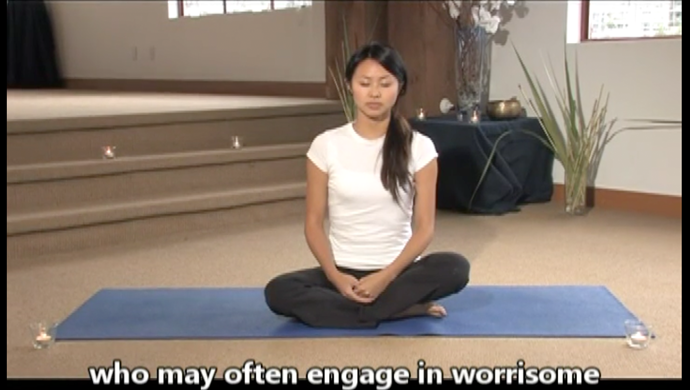
Find a peaceful and comfortable environment and follow the instructions below:
- To begin, take three deep breaths with the abdomen. Exhale slowly each time. When you exhale, imagine the tension flowing from your body.
- Hold your hand in a fist for 7-10 seconds, then relax for 15-20 seconds. Follow this same tensing and relaxing sequence for all muscle groups, here after indicated as ‘Tense and relax’.
- Pull the forearm up close to the ‘shoulder’and tighten your ‘biceps’.Tense and relax.
- Tighten your ‘triceps’ (the lower arm muscles) - straighten your arm and lock your elbows. Tense and relax.
- Raise your eyebrows as much as possible to tighten the muscles of your forehead. Tense and relax. Imagine your forehead muscles becoming smooth and soft when relaxed.
- Close your eyes and tighten the muscles around your eyes. Tense and relax. Imagine all the muscles around your eyes in a state of deep relaxation.
- With your mouth open, tighten the jaw muscles by stretching the muscles around the joints of the jaw. Tense and relax. Let your lips part, allowing your jaw to relax.
- Sit up straight, tighten the muscles behind your neck by tipping your head back to touch your back. This movement should be gentle to avoid neck damage. Focus tensing only on your back neck muscles. Tense and relax.
- Take a few deep breaths, and while maintaining your head position, relax the weight of your head onto your shoulders.
- Bring your shoulders up towards your ears, tensing the shoulder muscles. Tense and relax.
- Pull your shoulder muscles back, chest out and tighten the back shoulders as if someone is hitting between your shoulder blades. Tense and Relax.Repeat this exercise often as this muscle group is particularly tense.
- Take a deep breath to tighten your chest muscles. Tense and Relax. Imagine that stress is flowing out as you relax.
- Inhale inward through your abdomen to tighten your abdominal muscles. Tense and Relax. Imagine the feeling of relaxation spreading throughout your entire abdomen.
- Bend your knees and twist left and right to tighten lower back muscles. (Omit this step if you have lower back pain). Tense and Relax.
- Tighten your buttock muscles. Tense and Relax. Imagine your hip muscles becoming loose and soft.
- Straighten your knees and legs by tightening your thigh and hip muscles through your pelvis. Tense and Relax.Feel the smoothness of your completely relaxed thigh muscles.
- Bend your toes upwards with the heels pointing outwards to tighten your calf muscles (bend carefully to avoid cramps. Tense and Relax.
- Point your toes down to tighten your foot. Tense and Relax.
- If a particular muscle group is still tight, repeat the exercise once or twice maintaining the tensing and relaxation cycle.
- Imagine the feeling of relaxation slowly spreading throughout your body, starting with the muscles in your head right down to your toes.
This entire procedure should take about twenty to thirty minutes in the beginning. With skill and practice, the procedure can be reduced to 15 to 20 minutes. ‘Progressive Muscle Relaxation’practiced once a day on a regular basis can give you significant stress relief, reduce the frequency of "panic attacks" and is effective in reducing the symptoms of anxiety.
resources/en/account-course/lesson2/2.Progressive_Muscle_Relaxation.png
10 Minute Stress Reduction Exercise in the Office
Instructions:
- Each stretch should be done slowly and the stretch should be to a point where you feel a bit tight. Hold the position for 5 seconds before going back to the starting position.
- Relax after each stretch for five seconds then continue with the next.
- When rotating the head and body, return to the start position and do not continue to stretch when you feel slightly tight.
- While stretching, synchronize it with the breathing. Inhale as you stretch out, holding the stretch for five seconds and breathing normally. Exhale as you return to the starting position.
- Relax your shoulders during the exercise process.
Exercises:
- Forearm Rotation
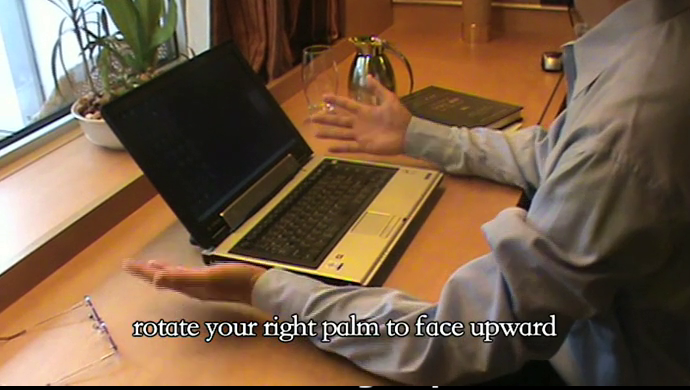
With both palms of the hands facing down and forearms on the desk, rotate your right palm to face upward then rotate back to face down. Repeat the same process with the other palm. - Finger Stretch
Open and stretch your fingers as wide as possible, and then make a fist. Repeat this stretch with alternating hands. - Neck Stretch (the back of the neck and joints)
Tuck your chin in towards your neck, and place your hands behind the back of your head. Relax your shoulders, and move your head up and down as if you are bowing. - Head Rotation
With slightly bent arms, tuck in your chin, turn your head slowly to the right, then back to your original position when you feel tightness. Repeat 5 times. Now turn your head to the left and repeat 5 times. You should feel the stretching of the muscle and tendons in the front chest and the side of the body. - Chest Expansion Exercise
With both palms of the hands facing up, lower both shoulders. The arms should be slightly extended outwards, with elbows locked, fingers stretched, and wrists bent backwards.Tuck in your chin, upper back against the back of the chair and lean back. This movement is to stretch the front side of the arm and the muscles and tendons of the front chest. - Body Side Flex
Hold your hands together and raise your elbows up to the ears. Flex your body to the right, repeat 5 times. Then flex your body to the left, repeat 5 times.
Hypnosis: Guided Hypnosis
With hypnosis, you will be changing your state of mind through directives that will change your level of brain activity. A carer or therapist will help you to reach a trance-like state and once you are in this state, you will be offered suggestions or directions that can reduce stress. When you are back in a fully conscious state, these suggestions will help you to relax and deal with anxiety in your everyday life.
Instructions:
For safety and to achieve the full benefits from hypnosis, you will need to work with a professional who will guide you to complete the hypnosis process. There are trained hypnotherapists whose only work involves using hypnosis techniques to help people achieve relief from physical or psychological problems.
Imagery
Imagery is a useful technique for people with anxiety who are often troubled with negative thoughts or self-talk to bring about this stressful state. Using visualization or imagery is considered to be quite an advanced step as you are using your imagination to take your mind to a different place where you find relaxing. Developing your ability to come up with your own positive visualizations can help you with other types of therapies for anxiety. You can review Cognitive Exercises or Behavioural Exercises for more information.
Imagery exercises can be practiced with the help of a therapist, or you can do them on your own. Since you select the images you want to visualise, you can use the imagery at any time to shorten or lessen stressful or anxious moments which can crop up while you go about your day-to-day activities.
Instructions:
- Start in a comfortable position.
- Think of a place or an image that you find relaxing or peaceful.
- Practice visualising this scene as clearly as possible for a short period of time.
- When you need to or when you are distracted, return to this scene again. Visualise this peaceful place or image for a short period of time. This will help you to return to your relaxed state of mind to cope with any possible stressful or anxious situation.
Tranquil Setting
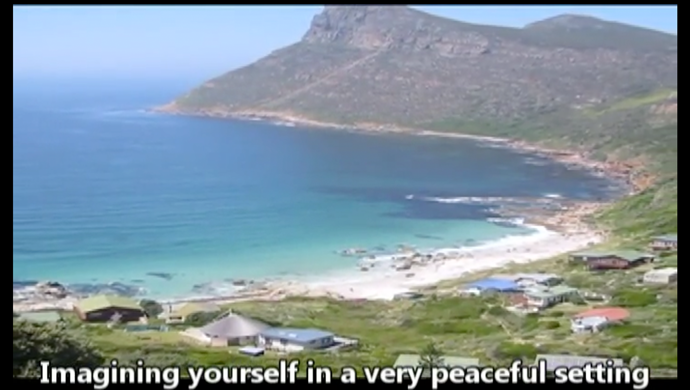
Imagine yourself in a very quiet environment, where you can feel so relaxed that you can be rid of stressful thoughts. This calm environment can be on a quiet beach, in the mountains with a small stream, beside a calm lake or in the comfort of your bedroom beside the fire on a cold winter’s night. You do not have to limit yourself to just a ‘real’ environment - you can for example imagine yourself drifting in the clouds on a magic carpet or flying amongst a flock of migrating geese. Whatever the setting, the important thing is to focus attention on the imaginary scene. Let yourself concentrate on a quiet scene to achieve a deeper state of relaxation. You will find that your muscle tension will ease, your heart rate will slow, your breathing will deepen, your hands will become warm, and so on. ‘Relaxation imagery’ is actually a mild form of self-hypnosis.
Here is an example of a peaceful scene:
You are walking barefoot along a beautiful beach. You can feel the soft white sand beneath your feet. You can hear the rise and fall of the sound of the waves. The water is a beautiful blue-green, dotted with white foam-capped waves. Near the horizon of this picture, you can see a sailing boat. The sound of the waves hitting the beach sends you into a relaxed state. The warm sun is shining and your skin glows as you inhale fresh salty sea air. You can feel the breeze on your face and in your hair. The whole scene is very attractive and you feel very calm and comfortable.
It is appropriate to use words which can induce the senses of sight, hearing, touch and taste to describe a tranquil setting. Use a variety of terms to increase the feeling of being immersed in the peaceful scene. The key point is to have a peaceful state of mind that transfers to a deep state of relaxation.
Start by recording a calm scene using vivid detailed descriptions and high emotive feelings. Answering the following questions can help you set the scene:
- What does this scene look like?
- What are the colors? What are the sounds?
- What time of day is it?
- What is the temperature?
- How do you do relate to the scene? What is your contact point?
- What does the air taste like?
- Are you alone or with others?
Soothing Music
Music is often called the ‘language of the soul’. It touches your inner self, enhances low moods and is one of the most effective ways to help relieve your stress. When you select music to relieve stress, you must select music suitable for relaxation rather than for emotional memory induced purposes.
書法療法
書法療法, 是基於人們書寫時對圖像及字符的反應, 而作出的不同效果。整體的操作, 可以達致情緒-心腦一致性的狀態。簡而言之。在書法過程, 人們的身體趨向平靜、穩定、規律化; 認知活動於顯示高度醒覺、注意集中、反應敏捷、思維清晰而靈活的現象; 還能展示出一種身心同步和諧的狀況, 產生身心保健、治療和行為矯治的效應。
書法訓練
在訓練過程中,書者的呼吸要平穩,肌肉的放鬆,同時視覺、運動等都要協同工作,身體也要做出調整。專注與放鬆對訓練和治療過程至關重要。
書法訓練的核心,是控制毛筆,掌握方法。為了達到專注,書寫時書者的吸氣深度和呼氣的平穩,控筆追踪符號, 圖像和文字, 可使身體脫離壓力, 焦虑及負性情緒, 進入心身和諧狀態。
壓力及焦虑之療法比較
近來, 書法與幾項主流療法,對照壓力, 焦虑 及负面 情緒的比較, 包括生物反饋(biofeedback)、針灸(acupuncture)、藥物(medicine)、靜坐(meditation)和放鬆訓練(muscle relaxation), 認定書法與任一療法比較, 有效程度至少相當; 而在有些指標上,書法的效果甚至超過這些療法。
高尚仁