IV. What choices of Behavioural Exercises can I use?
Course speech
You have a number of options to treat anxiety and worry with behavioural strategies. By using behavioural therapy tools, you will be able to break the connection between an anxiety-causing situation and the old responses you had. Your old responses could have been split into two categories, for example:
-
Complete avoidance:
- Never crossing a bridge
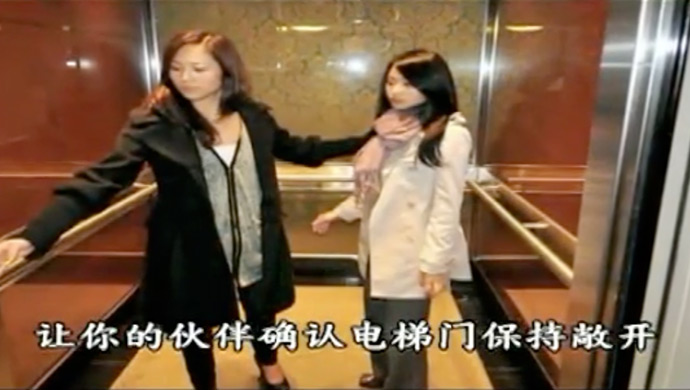
- Never going up a lift
- Never asking your spouse how he or she is feeling
- Short-term solution or:
- Crossing a bridge with a friend
- Going as far as the first floor on the lift
- Only using small-talk and polite conversation with your spouse
When you use behavioural strategies, you are taking on the stressful situation and confronting your fears head on. You will have a great opportunity to test the fears to see if they really are what you think them to be, and then to apply more positive and direct responses to them so that you will be rid of these fears once and for all. With behavioural strategies, you will need to be positive in order to achieve a positive attitude, but you will also need to be prepared for what facing your fears may bring. The end result may enable you to free yourself from anxiety and be able to enjoy the new activities you have always wanted to do.
Behavioural Therapy
Behaviour therapy is the core of all behavioural strategies which is used to modify the anxious response patterns you have, be it fear, worry or concern. Similar to the other two categories cited above, worry safety behaviours or passive avoidance are also another type of anxious response pattern that people normally use. You may use avoidance if you are afraid of something. For example, if you are afraid of large dogs, you may avoid dogs altogether. Or, you may use worry safety behaviour, something you feel you need to do to prevent the fear from surfacing. If you are constantly worried about being late, you may repeatedly review your calendar because you feel you may miss an appointment at any time.
Worry safety behaviour or passive avoidance however, do not solve the actual cause of your fear, and can only be a temporary stop-gap for your anxiety. Behaviour therapy helps you remove or change the connection between your fears and anxiety behaviours, so that you can respond directly to your fears or concerns.
Once you identify a fear or anxiety-causing event which you would like to change or remove, you can use the behavioural therapy strategies described in this lesson.
Instructions:- Start by identifying the worry safety or the avoidance response you intend to change or remove. As an example, your fear of crossing the local bridge may lead you to never cross that bridge and you realize that you will be unable to take the job you have been offered unless you learn to cross the bridge. This is passive avoidance behaviour. You therefore decide to solve your bridge fears by only traveling over the bridge with a friend. When you find out that your friend is not available to go with you over the bridge for an appointment, you will have to learn a new way to deal with your fears. This is a form of worry safety behaviour.
- If you want to change an avoidance behaviour, you can use any of the Exposure Therapy, Cognitive Behavioural Therapy, or Behavioural Experiment Techniques described below.
- If you are looking to change the worry safety behaviour, you can use Systematic Desensitization or Cognitive Behavioural Therapy. In the cases of worry behaviours stemming from trauma, EMDR or Prolonged Exposure, working with a therapist is an option.
Exposure Therapy
Exposure therapy techniques can help you end the panic from the fears you have. These strategies use an exposure program to disconnect the anxiety-causing event from your old anxious response. Exposure therapy addresses phobias, or specific fears that you may come across in your everyday life.
There are also different formats for the exposure:- In vivo: in everyday life
- Imaginable: imagining your fear in events or situations in your mind
- Imagery: pictures or video of your fear in an event or situation
- Virtual reality: computer-aided exposure to your fear in an event or situation
Although systematic desensitization also uses a measured exposure to a fear producing event or subject, exposure therapy seeks to remove the anxious response altogether, and replace it instead with a different and relaxing response.
Instructions:- Decide which subject of fear you would like to address. It may be one you come into contact several times a day, and each time it happens, it may make you want to leave or avoid the situation altogether. Make a list of these situations.
- Rate the level of anxiety and fear you have for each of the situations you may come across from 0 –100.
- List these events in the order of your anxiety rankings. You will use this ranking list to practice the exposure to your fear.
- Select your format of exposure. You may wish to select the one that is the easiest or the most available to you. For example: if your fear is of riding the bus, it may be easier for you to actually go on that bus. However, if your fear is of a certain type of spider, you may wish to use pictures or imagery.
- Start with the lowest rated event where fear occurs. Approach the event directly. Your natural anxiety response will kick in, but allow it to do so without leaving the situation. Stay with the event until the event ends or until you feel your anxiety decreasing.
- Do not leave the situation before the anxiety has passed or before the event has ended. Stay at that level and keep practicing until it is over. Then you can move on to the next event at the next level of anxiety.
- At the end of each practice, reflect on your experience. Consider whether you understand what is going on around you, and how you see the event. That may help you stay even more focused the next time you practice.
There are also other variations on exposure therapy. These include:
- Written exposure therapy: You can take on written exposure on your own, but you may need the help of a therapist if the levels of exposure to your fear are high.
- Flooding, or prolonged exposure: This is for people who have experienced severe trauma. Prolonged exposure for people should enlist the help of a therapist trained specifically for this therapy. Instead of a gradual exposure to fear events, you will be exposed to your fear at the highest anxiety-causing level possible until your panic response ends. This is often done with the help of a therapist, so that the exposure will be addressed and not minimised by you.
Prolonged Exposure
Prolonged exposure therapy has been successful for people who have survived traumatic events (sexual assault, abuse, or extreme violence) or have been diagnosed with PTSD. It is a multi-step process that involves education about anxiety responses to traumatic events, followed by intense imaginable exposure, then in vivo exposure to trauma reminders.
Written Exposure Therapy
Written Exposure Therapy is a form of exposure therapy that uses writing to progressively expose you to details and depth of your anxiety-causing event, to enable you to process and lessen the fears. It uses the same planned, gradual schedule to direct your writing as a form of exposure.
Behavioural Experiments
Behavioural experiments are one-off tests on your responses to anxiety-causing events. By testing yourself during an anxiety-causing episode, you can see if what you feared would happen or whether it actually did happen. You may take a risk and try a behavioural experiment to just find out what your worst fears are. If that is not the outcome, you will at least be able to do the things you wanted to do without fear, or to try new things without the constantly worrying.
Behavioural experiments are like “mini” Behavioural Therapy. You can plan what fear you want to test before you begin and consider your expectations, and then give yourself time to process and reflect on it when you finish.
Instructions:
- First, consider and select a fear you would like to “experiment” with. For example, if you are fearful of buses, it can be as simple as taking the bus for one stop only. If you are afraid of starting the experiment and you feel the pressure, you can start with the lowest level first.
- Before you begin your experiment, ask yourself the following:
- How will this experiment test my fear?
- What are the best and worst results of this experiment?
- What do I predict will happen?
- What would happen if both were true? What would I do next?
- After you have completed your experiment, give yourself some time to reflect and process what has happened. You can then ask yourself the following questions:
- What happened when I tested my fear?
- Was it what I predicted?
- What did I learn?
- Can I use this process again to test other fears? How? Which fears?
It may feel a bit strange or scary to actively test your fears, but it gives you a great opportunity to learn the truth of what you are really afraid of. Take it slowly and in small steps if necessary.
Systematic Desensitization
- responses to stressful events or situations. This type of therapy is often used to help people overcome fears and phobias.
Systematic Desensitization is a behavioural strategy in which you can learn a different and possibly healthier response to stressful events or situations. It is often used to help people overcome fears and phobias. You will be pairing an anxiety producing situation with a more positive, relaxing and healthy response. For example, you may normally react to your fear of crossing a bridge with deep panic or avoidance when you feel a physical anxiety coming on. With systematic desensitization, you can train yourself to react to the fear with relaxation or deep breathing.
The instructions below give an example of pairing a fear of bridges with deep breathing. When you decide what fear you would like to work on, you can use the same process.
Instructions:- Select your fear that you would like to desensitize. In your mind, focus on your fear in steps, from the beginning, where the least anxiety occurs, to the point where you come into full contact with your source of fear. Use up to 10 images to imagine your fear. As you go through these images, let your usual feelings of anxiety come through.
If you fear crossing a bridge alone, start to imagine getting into the car for your ride over the bridge. Then imagine driving in traffic on the way, turn left to the street the bridge is on, and wait to cross the bridge. You then cross the bridge. Once you have crossed over, you see the bridge in your rear view mirror. - Now that you have these steps in mind, what they look and feel like, go through them again, but this time, you will use a deep breathing response. With each image in mind, breathe deeply from your stomach, as if your stomach and chest are full of air, and then breathe out slowly. The deep breaths will be relaxing.
- Practice this step-by-step imagination and breathing process every day until you no longer feel anxiety with each image, and can breathe deeply through each step.
- After you are able to do this, you may be ready to cross the bridge. You have tools you can now use to get to the bridge, cross it, and pass it.
You may get panicky after the first step, or after the third, or right before the end. Do not give up, and keep practicing. This is not a race, and it is more important that you can get through all the steps than how quickly you can do it.
Cognitive Behavioural Therapy
Cognitive Behavioural Therapy (CBT) helps lower anxiety by changing how you think or feel about stressful events, and also how you respond to them. CBT combines two types of strategies: behaviourial and cognitive strategies. With CBT, you are able to:
- Stop or change beliefs
- Change attitudes and assumptions
- Alter imagery which can influence anxiety
These actions will help you deal with the day-to-day stresses or fears, with calm and will allow yourself to take control of your actions.
Acceptance and Commitment Therapy (ACT) is similar to CBT since it recognizes that anxious thoughts and feelings can result in avoidance or fearful responses to stressors instead of dealing with them in a positive or productive way. The focus is different:
- ACT aims to improve your overall wellbeing.
- ACT allows you to acknowledge and accept the anxious thoughts and feelings as they are, without the feeling of being judged or to be hurt by them.
- Unlike CBT, you do not have to change or examine whether or not the fears and feelings are realistic. you can take them as they are. Once you accept them, you can use behavioural strategies like Systematic Desensitization or Behaviour Therapy to lower anxiety.
Much like Cognitive Therapy and Behaviour Therapy, CBT is an active process where you can be the master of your own recovery. You will have writing, homework, and practice that will give you a number of strategies to address anxious thoughts and reactions.
Since CBT and ACT use strategies from Cognitive Therapy and Behavioural Therapy, the techniques used to change anxious thoughts or behaviours can vary. However, there is a basic process that is the same regardless of the strategies used. Below are the steps you can use in CBT. You can also visit the Cognitive Exercises lesson for more information.
Instructions:
- Keeping a journal:
Throughout the Cognitive Behavioural Therapy, you need to keep a record by organising a method to identify and write in detail about:
- anxious thoughts
- cognitive distortions and
- negative self-talk
- when did it occur
- was it in the past or the future
- how you felt at the time
Below is a journal from someone who worries about failing a test which may help you to organise yours.
|
Date |
Worry Topic |
Past or Future |
Situation where this happens |
Anxious Thought Described |
Examine the evidence |
What can you do now |
|
April 11 |
Being a failure |
Past |
During mid terms |
I stayed up so late to cram and study hard, and it seems like I couldn’t do well at all |
I didn’t fail, I actually got a B |
Accept my grade; it was actually pretty good since the test was very difficult |
Adapted from Hazlett-Stevens (2008)
After keeping a journal to identify anxious thoughts, you can study the evidence behind these distortions to see if there is any logical support for them. You can also form different conclusions of what happened if it was a past anxiety-causing episode, or different predictions if it is a future worry.
In the sample journal above, the person is clearly worried about being a failure because of her past mid-term performance, but on reading back her comments, she realises that there is nothing that really supports her being a failure - she actually got a “B” in her exam.
You can use Behavioural Experiments to test your forecast about an anxiety-causing event in real life, based on what you identified in the previous step. For example: if you are worried about being a failure even after realizing that you have obtained good grades on your exams, you can ask your professors for a current grade during term time. You may find your future worries are nothing to worry about!
4. Other Behavioural Techniques:If your worry or anxiety-causing event is on-going or have a major fear that leads to avoidance or safety behaviours, you can use strategies like behaviour therapy or desensitization to develop new, and more positive responses to long-term stressors.
To fully understand the cognitive strategies that are a part of CBT and to make your experience more effective, you may want to check out the lesson on Cognitive Exercises.
Eye Movement Desensitization and Reprocessing (EMDR)
Eye Movement Desensitization and Reprocessing (EMDR) is a complex behavioural treatment process that relies on concepts of:
- desensitization
- physiology and
- theories of information processing
The basic idea is that directed eye movement and imagery can help the mind “unlock” the source of anxiety or psychological problems. It is primarily used with people who have anxiety from traumatic events or have been diagnosed with PTSD. EMDR is done under the direction of a therapist who can guide you through the eye movements and the re-thinking of your beliefs.
Instructions:
EMDR involves imagining trauma and guided eye movement while discussing a change of belief at the same time Therefore it must only be done with the assistance of a professional therapist. You may uncover some deeply difficult concerns and feelings, so it would be best to have support throughout the EMDR process.
While you are guided to recall the imagery and physical sensations involved with a traumatic event, your therapist will ask you to:
- make side-to-side eye movements by tracking the movement of your finger
- describe in detail your feelings and thoughts about the event, while you are doing the side-to-side eye moments
As those negative or traumatic thoughts come out, you will have the opportunity to re-think them more positively, or “re-frame” them. The image you had at the beginning of the EMDR treatment would be viewed in a more positive light as a result.